
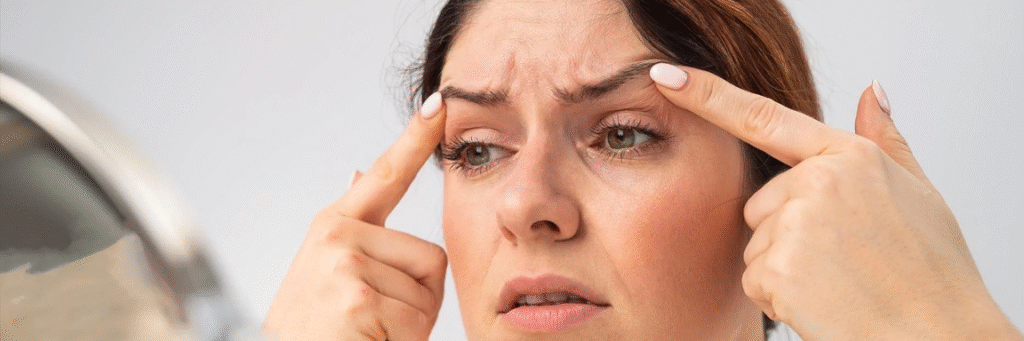
We often think of stress as something that lives in our minds deadlines, exams, relationships, or sleepless nights. But your skin feels it too. Every pimple that pops up before an important event or every dull patch that shows up after a tough week? That’s your skin reflecting what’s going on inside you.
Let’s find exactly what happens to your face when you’re stressed, why it happens, and most importantly, how to help your skin recover.
1. Stress Sends Your Hormones Into Overdrive
When you’re stressed, your body releases cortisol, also known as the “stress hormone.” Cortisol affects your entire system, including your skin. It increases oil (sebum) production, weakens your skin barrier, and triggers inflammation.
The result?
- Unexpected breakouts
- Oily T-zone with dry patches elsewhere
- Dull, uneven texture
Dermatologist Insight:
Chronic stress keeps your cortisol levels high, which means your skin stays in “defense mode.” This prevents it from properly repairing itself at night, leading to breakouts, roughness, and faster aging.
Calming Fix:
Focus on restoring balance with a gentle cleanser and niacinamide serum to regulate oil and soothe inflammation.
Try:
- CeraVe Foaming Facial Cleanser: removes excess oil without stripping moisture.
- The Ordinary Niacinamide 10% + Zinc: controls sebum and calms redness.
Both are available at Dvago, ensuring authenticity and dermatologist-trusted formulas.
2. Stress Breaks Down Collagen, Leading to Premature Aging
Collagen is your skin’s natural “support structure.” It keeps your face plump, firm, and smooth. But when cortisol levels stay high, they break down collagen and elastin fibers, leading to fine lines, sagging, and loss of elasticity.
You may notice:
- Your under-eye area looks more hollow
- Fine lines forming around your mouth or forehead
- A tired, “drawn” look that doesn’t go away even with sleep
Reboot Tip:
To counteract this, you need antioxidants and retinoid ingredients that stimulate collagen production and fight oxidative damage caused by stress.
Derm-approved boosters:
- La Roche-Posay Pure Vitamin C10 Serum: brightens and strengthens skin.
- The Ordinary Retinol 0.2% in Squalane: supports collagen renewal overnight.
And remember, hydration is key. Even the best anti-aging routine won’t work on dehydrated skin. Pair your actives with a moisture-locking barrier cream like CeraVe Moisturizing Cream for best results.
3. Stress Makes Your Skin More Sensitive
Ever noticed that during stressful times, even your regular products start to sting or burn? That’s because stress weakens your skin barrier, the outermost layer that protects you from irritants and moisture loss.
When this barrier breaks down, your skin becomes reactive, red, itchy, flaky, or easily inflamed.
What’s happening underneath:
- Your immune system goes into alert mode.
- Blood flow increases to the surface (causing redness).
- The barrier loses its ability to hold moisture.
The Fix:
Switch to barrier-repairing and fragrance-free products. Think of it as giving your skin a break to recover from overload.
Try:
- Avene Cicalfate+ Restorative Cream: heals and calms irritated skin.
- Physiogel Calming Relief Cream: ideal for sensitive or redness-prone skin.
You can find both at Dvago, Pakistan’s trusted source for dermatologist-approved skincare.
4. Stress Triggers Inflammation and That Means Breakouts
Stress doesn’t just make you feel tense; it literally makes your skin inflamed. Cortisol and adrenaline signal your oil glands to go into overproduction mode. Excess oil + bacteria + dead skin = acne flare-ups, even if you’re usually not acne-prone.
Add in poor sleep and sugar cravings (common during stressful times), and you have the perfect storm for breakouts.
How to Fight Back:
- Use salicylic acid (BHA) to unclog pores.
- Add a lightweight, oil-free moisturizer to prevent dehydration.
- Avoid over-cleansing; it’ll make things worse.
Dermatologist favorites:
- Paula’s Choice 2% BHA Liquid Exfoliant: unclogs pores and smooths texture.
- Bioderma Sébium Hydra Moisturiser: hydrates without heaviness.
5. Stress Dehydrates the Skin Literally
You may drink less water when you’re busy or anxious, but even if you don’t, stress still dehydrates your skin from the inside out. Elevated cortisol levels reduce your skin’s natural ability to retain moisture.
Visible signs:
- Flaky texture
- Tightness
- Foundation clinging to dry patches
- Skin that feels rough or papery
Rehydration Routine:
- Start with a hydrating cleanser.
- Layer a hyaluronic acid serum on damp skin.
- Seal it with a moisturizer rich in ceramides or squalane.
Try:
- Vichy Mineral 89 Hyaluronic Booster: deeply hydrates and strengthens the barrier.
- CeraVe Hydrating Cleanser: gentle and replenishing.
Available through Dvago, where every product is guaranteed genuine and temperature-protected.
6. Stress Disrupts Your Sleep, And It Shows
Dark circles, puffiness, and dull tone are classic signs of sleep deprivation, which often accompanies stress. During deep sleep, your body repairs damaged cells and boosts collagen production so when that process is interrupted, your skin can’t renew itself properly.
What You’ll Notice:
- Puffy eyes or dark circles
- Rough texture
- Lack of natural glow
The Fix:
- Prioritize 7–8 hours of quality sleep.
- Add antioxidants and brighteners to your night routine.
- Use a cooling eye gel to reduce puffiness.
Try:
- The Ordinary Caffeine Solution 5% + EGCG: reduces dark circles and puffiness.
- La Roche-Posay Hyalu B5 Serum: restores plumpness overnight.
And remember, even small rituals, like winding down with a gentle cleanser and moisturizer before bed, tell your body it’s time to rest.
7. Stress Slows Down Healing and Exacerbates Conditions
Stress doesn’t just cause new issues; it worsens existing skin conditions. If you have eczema, psoriasis, or rosacea, flare-ups tend to intensify during stressful periods. Your body’s healing process slows, meaning pimples, cuts, or rashes take longer to fade.
Dermatologist Insight:
Chronic stress increases inflammation markers that hinder wound healing and make your immune system less efficient, so your skin takes longer to bounce back.
What Helps:
- Use barrier-restoring products consistently.
- Avoid overusing actives (like acids or retinol).
- Incorporate calming ingredients like centella asiatica, panthenol, and ceramides.
Try:
- COSRX Centella Blemish Cream: soothes and speeds up healing.
- Eucerin Advanced Repair Cream: supports long-term barrier recovery.
8. Stress and Lifestyle Go Hand-in-Hand
When you’re stressed, self-care often takes a back seat. You might skip your skincare, sleep less, drink more caffeine, or eat more sugar, all of which reflect on your skin.
How lifestyle amplifies stress on skin:
- Sugar: spikes insulin and triggers oil production ? acne
- Caffeine: dehydrates the skin and increases cortisol
- Lack of exercise: slows circulation, reducing oxygen to the skin